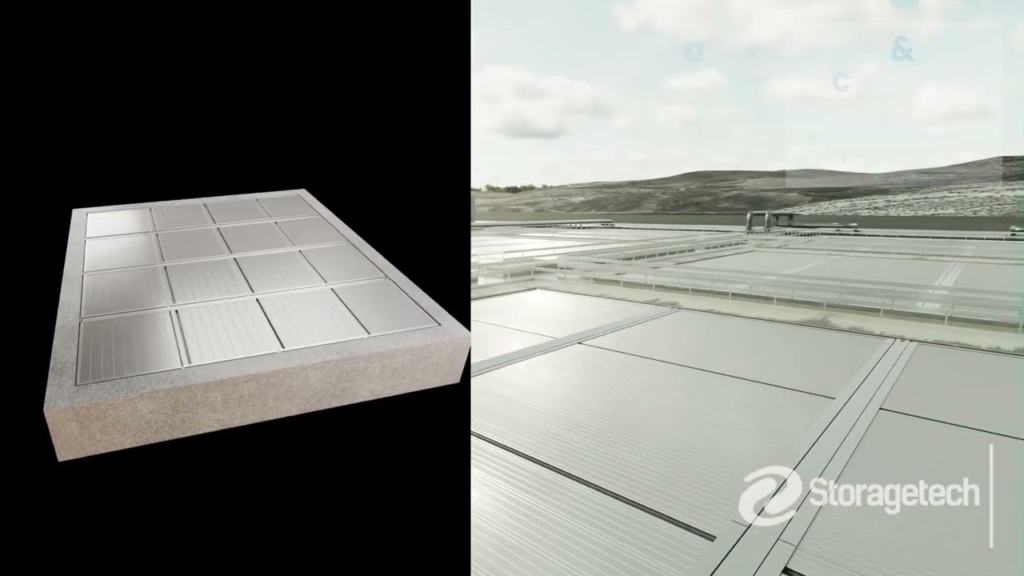
In the energy, petrochemical, and chemical industries, the safe, efficient, and environmentally responsible operation of storage tanks is of critical importance. Vapor losses generated during the storage of gasoline, naphtha, crude oil, jet fuel, and other volatile hydrocarbons not only reduce product value but also contribute to increased environmental emissions. As environmental regulations become more stringent and sustainability targets continue to evolve, storage terminal operators are increasingly adopting advanced technologies that enhance emission control, operational safety, and asset reliability.
GRP (Glass Reinforced Plastic) Internal Floating Roof (IFR) systems are designed to minimize vapor space within fixed-roof storage tanks by maintaining continuous contact with the liquid surface. This full-contact design significantly reduces evaporative product losses and VOC (Volatile Organic Compound) emissions while helping preserve product quality and improve operational efficiency.
Manufactured from advanced composite materials, GRP IFR systems combine superior corrosion resistance, lightweight construction, high mechanical strength, and antistatic properties in a single solution. Unlike conventional metallic floating roofs, GRP structures are inherently resistant to corrosion and aggressive storage environments, reducing maintenance requirements and extending service life. Their high strength-to-weight ratio provides excellent structural performance while minimizing loads imposed on the tank structure.
The antistatic surface design and conductive grounding features help safely dissipate electrostatic charges generated during filling, emptying, and product movement operations. This enhances safety in tanks storing flammable and combustible liquids and supports compliance with applicable safety requirements.
The low-profile configuration maximizes usable tank capacity, while the modular construction allows for efficient installation in both new storage tanks and retrofit applications. By combining emission reduction, corrosion resistance, operational safety, and long-term reliability, GRP IFR systems provide a cost-effective and sustainable solution for refineries, fuel terminals, petrochemical plants, chemical storage facilities, and other bulk liquid storage applications.
Key Benefits
Superior Corrosion Resistance
GRP IFR systems are manufactured using high-performance vinyl ester resins and glass fiber reinforced composite materials, providing exceptional resistance to a wide range of chemicals, including ethanol, methanol, and various petrochemical products. Unlike conventional metallic floating roofs, GRP structures are not susceptible to rust, galvanic corrosion, or flotation chamber deterioration, resulting in extended service life and reduced maintenance requirements.
Enhanced Emission Control
The seamless, full-contact design minimizes the evaporation surface above the stored liquid, significantly reducing VOC (Volatile Organic Compound) emissions and product losses. This contributes to improved environmental performance while preserving product quality and maximizing product recovery.
High Mechanical Strength
GRP composite structures offer an excellent strength-to-weight ratio. Despite their lightweight construction, they are capable of withstanding dynamic loads, turbulence, and operational stresses encountered during tank operation. The robust composite design minimizes the risk of deformation, cracking, and structural damage.
Maximized Storage Capacity
The low-profile configuration increases the usable storage volume of the tank and enables safe operation at higher product levels. This allows terminal operators to maximize storage efficiency and optimize tank utilization.
Easy Installation and Low Maintenance
Modular GRP components can be installed through standard tank manways, making them ideal for both new installations and retrofit projects. Their corrosion-resistant construction eliminates the need for painting, coating, or routine corrosion-related maintenance, reducing operating costs and minimizing downtime throughout the system’s service life.
Its corrosion-resistant construction eliminates the need for painting, protective coatings, or routine corrosion-related maintenance, resulting in lower operating costs and a more efficient, cost-effective solution throughout the system’s service life.
Antistatic Design and Grounding System
GRP IFR systems incorporate antistatic design features that facilitate the safe dissipation of electrostatic charges generated during filling, emptying, and product movement operations. This capability is particularly important in tanks storing ethanol, methanol, gasoline, and other flammable or combustible liquids.
To maintain continuous electrical continuity between the floating roof and the tank shell, a Retractable Grounding Assembly (RGA) can be integrated into the system. This automatic grounding mechanism safely transfers accumulated static charges to the tank grounding system, further enhancing operational safety and reducing ignition risks in potentially hazardous environments.
Fire Safety
GRP IFR systems are designed to provide a high level of fire safety in aboveground storage tanks. The composite structure is manufactured using specialized flame-retardant resin systems and engineered to meet applicable fire safety requirements and industry standards.
The full-contact design minimizes the vapor space between the floating roof and the stored liquid, reducing the accumulation of hydrocarbon vapors and helping to lower the potential fire load within the tank. When used in conjunction with appropriate primary and secondary seal systems, GRP IFRs further enhance vapor containment and reduce the formation of flammable atmospheres inside the tank. As a result, operational safety is improved, and the risk of fire-related incidents is significantly reduced.
Design Features
- Full-contact design minimizes vapor generation and VOC emissions.
- Gas-tight construction enhances emission containment performance.
- Lightweight, high-strength GRP composite structure.
- Superior resistance to corrosion, chemicals, and hydrocarbon vapors.
- Modular construction enables fast and efficient installation.
- Antistatic and fire-retardant design options available.
- Compatible with a wide range of primary and secondary sealing systems.
- Maintenance-free, corrosion-resistant design for extended service life.
Technical Specifications
- Advanced GRP composite construction.
- High-performance vinyl ester resin system.
- Lightweight, high-strength structural design.
- Corrosion-resistant and maintenance-free operation.
- Excellent buoyancy performance and structural integrity.
- Antistatic surface treatment and grounding compatibility.
- Engineered in compliance with API 650, API 2000, and applicable industry standards.
- Long-term durability and reliable operational performance.
Regulatory Requirements and Applicable Standards
GRP IFR systems are designed to comply with internationally recognized standards and industry best practices for emission control, product conservation, and safe storage tank operation. By reducing VOC (Volatile Organic Compound) emissions and minimizing product losses, these systems support environmental compliance while enhancing operational safety and efficiency.
Key Reference Standards
- API 650 – Welded Tanks for Oil Storage
- API 2000 – Venting Atmospheric and Low-Pressure Storage Tanks
- API 2026 – Safe Access/Egress Involving Floating Roofs
- NFPA 30 – Flammable and Combustible Liquids Code
Application Areas
- Oil & Gas
- Refining
- Petrochemical
- Chemical Processing
- Fuel Storage & Distribution
- Aviation Fuel Storage
- Bulk Liquid Storage
- Energy & Utilities
- Industrial Processing Facilities